Stories and music made with heart for little ones
We are an independent Mexican studio. We create worlds full of texture, learning, laughter and lots of love — straight from imagination and the heart to the screen.
We are an independent Mexican studio. We create worlds full of texture, learning, laughter and lots of love — straight from imagination and the heart to the screen.
Chéche Studios started the way important things start: at home. A dad, his son Chéche, and the search for content that didn't shout, didn't rush and didn't overwhelm — something that would awaken the mind calmly instead of numbing it.
Since we couldn't find it, we made it, inspired by the textures of clay, watercolor, felt, crochet and paper. With real songs, animals from our land and emotions kids know well.
We want every episode to be a seed: to spark a love of art and be the bridge that leads little ones away from the screen and into the real world to try it themselves — with their own brushes, their own clay and their own hands.
Today we create series, music and materials so families can sing, play and grow together. No rush, no noise.
"A happy childhood builds a better tomorrow"
Science doesn't say screens are bad in themselves. It says it matters a lot how much time, what content and in whose company. This is what worries us most as a family, and what guides every decision we make.
A screen talks, but it doesn't listen. A study of nearly 1,900 children in 20 Latin American countries, including Mexico, linked more screen time to smaller vocabularies. Watching together and reading together, on the other hand, were linked to better language.
In one experiment, 4-year-olds spent 9 minutes in one of three ways: watching a fast-paced cartoon (a new scene every 11 seconds), watching a slow-paced cartoon, or drawing. Afterwards, the fast-cartoon group did worse on attention and self-control. The slow-cartoon group did just as well as the kids who drew, with no screen at all. Pacing matters.
Soothing with a phone works today, but it takes away chances to learn to calm down. More tablet use at age 3½ was linked to more anger and frustration a year later. It's nobody's fault: it's a cycle worth knowing about so we can break it.
While they sleep, children sort through what they lived during the day. Screens push bedtime later and leave kids "wired", and less sleep is one of the main paths to emotional problems.
In the early years, kids grow by climbing, painting, building and talking at the table. The WHO recommends no screen time before age 2 and, from 2 to 4, no more than one hour a day: less is better.
Screens are already part of family life. So we don't try to eliminate them; we make content that respects how children grow and invites them to step away. These are the rules that guide us:
Less screen, more dinner table.
Many of these studies show associations and don't always prove causes. Still, across different countries, they point in the same direction. The article includes sources and practical ideas for home.
Each project is a world of its own, with its own music and its own friends.
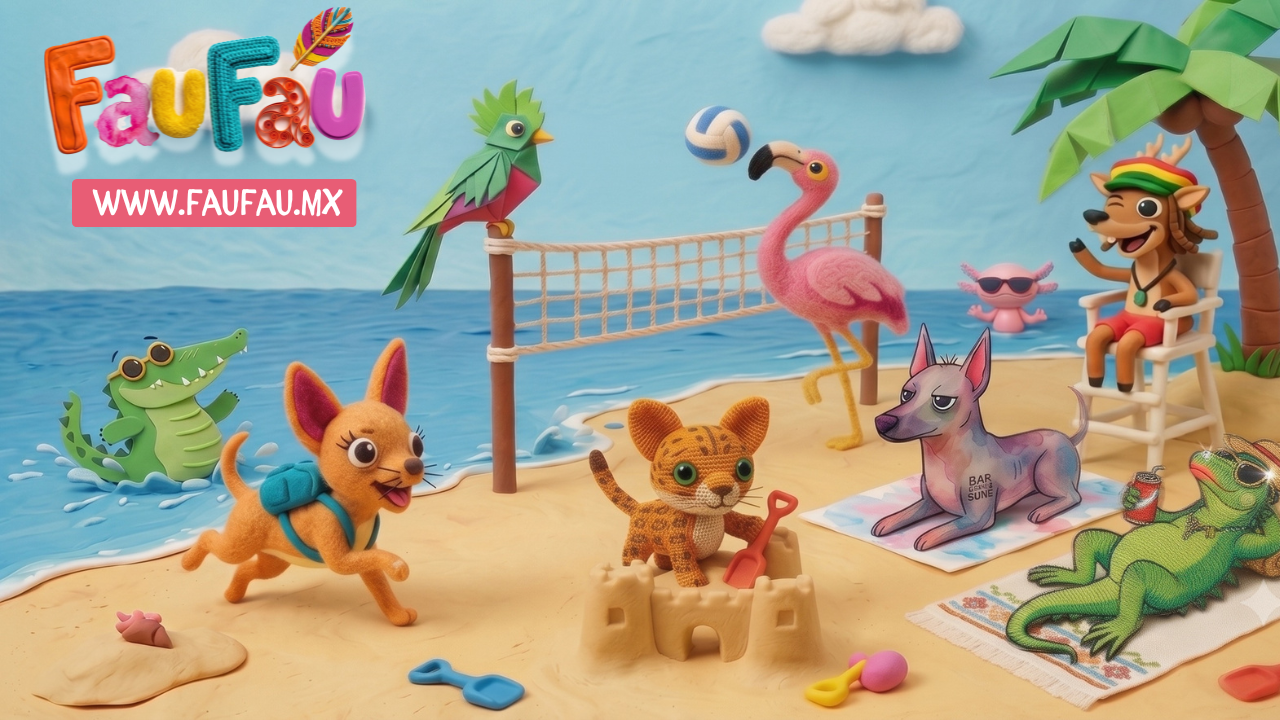
Nine animals from Mexico —a brave chihuahua, a zen axolotl, a crocodile learning to share— and original songs ranging from cumbia to bossa nova. Social-emotional values that are sung, not preached. (Songs in Spanish.)

A sweet prehistoric world made for the littlest ones at home (age 3 and under): soft, cheerful, easy-to-dance-to music to get their bodies moving while they meet Dony and his dinosaur friends.

Nik and Kin, eight-year-old twins, are both sure they're the captain of the same ship. With their crew of creatures from Dzilam de Bravo, Yucatán, they hunt for a legendary pirate's treasure. They never come back with gold: they come back with something worth more. Salt water, sweet heart.
In development — more news soonPress, licensing, distribution, partnerships or just saying hi — we love to hear from you.
Write to us